
The High-Stakes Reality of AI Content in YMYL Niches

Recent evaluations confirm that utilizing AI-generated content for “Your Money or Your Life” (YMYL) topics poses severe algorithmic risks. Artificial intelligence consistently fails to meet Google’s stringent quality thresholds for these critical subjects, often producing generic, unverified, or entirely hallucinated claims. To safeguard search visibility, human expertise and rigorous E-E-A-T principles remain non-negotiable. As search algorithms become increasingly sophisticated, the temptation to scale production using Large Language Models (LLMs) is high. However, when dealing with content that directly impacts user health, financial stability, or safety, automation can lead to catastrophic ranking drops. According to recent Documentation, relying on AI for critical topics introduces unacceptable levels of risk, demanding a return to verified, human-led editorial strategies. Technical Deep Dive: Why AI Fails Google’s YMYL Standards Understanding the fundamental limitations of generative AI is critical for maintaining indexation and authority. Here is why automated content falls short in high-stakes environments: Algorithmic Incompatibility Issues: AI systems consistently fail to satisfy Google’s rigid criteria for YMYL content, frequently generating generic fluff, factual inaccuracies, or dangerous hallucinations. Stricter Evaluation Thresholds: Google applies significantly more rigorous algorithmic and quality rater standards to YMYL queries, demanding demonstrable Experience, Expertise, Authoritativeness, and Trustworthiness (E-E-A-T). Human Expertise is Mandatory: Publishers must rely on genuine human insight and exhaustive fact-checking protocols to ensure long-term indexing success and avoid severe manual or algorithmic penalties. Impact on WordPress Sites and Google Search For organizations managing high-impact content via WordPress, integrating AI writing plugins requires extreme caution. While automation can assist with background research or structural outlines, deploying raw AI outputs on core pages directly jeopardizes your standing in Google Search. If your architecture powers medical, financial, or legal portals, protecting your database from automated, unchecked content injections is vital. To ensure your digital infrastructure meets these rigorous quality thresholds, our comprehensive SEO solutions provide the necessary technical audits, robust optimization, and strategic oversight. Strategic Action Plan for YMYL Compliance To secure your rankings and mitigate the risks associated with automated content generation, implement the following immediate technical directives: Conduct comprehensive content audits: Systematically review all existing YMYL pages to identify and rectify any AI-generated segments that lack verifiable human expertise or factual accuracy. Enforce strict editorial policies: Establish rigid workflows for YMYL content creation that mandate human authorship, specialized expert review, and meticulous fact-checking processes. Prioritize core E-E-A-T signals: Proactively demonstrate Experience, Expertise, Authoritativeness, and Trustworthiness across your platform through detailed author bios, explicit sourcing, and transparent editorial guidelines. Read Also: How Brand Mentions Influence AI Search Visibility Conclusion Navigating the intersection of generative AI and Google’s YMYL standards requires precision and restraint. While AI offers remarkable scaling capabilities for general topics, applying it to high-stakes niches without expert human oversight is a critical technical error. By prioritizing genuine expertise and rigorous editorial standards, your brand can maintain its authority and dominate the search landscape. Recommended Resource: Keep your technical team updated on algorithmic shifts by subscribing to the Search Engine Journal Feed. Request Your WP SEO Audit Now →
The Truth About Generative Engine Optimization: Why Brand Building Outperforms Specialized GEO Tools

A recent shift in the SEO landscape highlights a critical reality: visibility in AI search models like ChatGPT, Claude, and Perplexity depends heavily on fundamental brand building, high-quality content, and established authority, rather than isolated ‘AI optimization’ strategies. The recent closure of a dedicated GEO platform underscores that traditional digital assets remain the core driver of AI visibility. As the search ecosystem evolves with the integration of Large Language Models (LLMs), technical marketers are re-evaluating their resource allocation. Recent insights from Industry Reports reveal a growing consensus: specialized Generative Engine Optimization (GEO) tools may not be strictly necessary for most brands. Instead, the data feeding these AI engines is fundamentally tied to the same high-quality content that drives traditional search performance. Technical Deep Dive: The Mechanics of AI Visibility Understanding how AI models retrieve and synthesize information is crucial for modern digital strategy. Here is a breakdown of the core dynamics governing AI search representation: Brand Building is the Foundation: Visibility in AI search relies primarily on strong brand presence and genuine expertise, overriding fragmented AI-specific optimization tactics. GEO Tools May Be Redundant: Specialized platforms for Generative Engine Optimization often provide data that does not fundamentally alter core tactics, making them unnecessary for most operations. AI Models Train on Content: The algorithms powering LLMs process the exact same content that builds your brand equity elsewhere, reinforcing the need to invest in foundational digital assets. To navigate these algorithmic shifts efficiently, partnering with a robust technical team is essential. Our comprehensive SEO solutions are designed to fortify your digital infrastructure, ensuring your brand signals are processed correctly by both traditional crawlers and modern AI agents. Impact on Multi-Platform Environments For organizations operating across multiple platforms, this shift simplifies the optimization roadmap. You do not need to deploy distinct ‘AI visibility’ scripts or completely re-architect your content taxonomy for LLMs. Instead, the focus should remain on technical excellence: site speed, structured data, clean code, and authoritative content publication. AI bots crawl and index your multi-platform environments just like traditional search bots—they reward clarity, technical health, and verifiable authority. Strategic Action Plan To ensure your enterprise remains visible in an AI-driven search landscape, implement the following directives: Re-evaluate specialized AI investments: Assess the true necessity of dedicated GEO tools and redirect those resources toward strengthening foundational brand building. Produce high-quality, authoritative content: Consistently publish reliable material that demonstrates genuine expertise to secure visibility across all search models. Prioritize entity recognition strategies: Ensure your brand is clearly defined across the web through consistent data, digital PR, and strong technical foundations. Read Also: How Brand Mentions Influence AI Search Visibility Conclusion The debate over Generative Engine Optimization ultimately brings us back to SEO fundamentals. AI search engines are sophisticated pattern matchers seeking the most reliable, authoritative sources. By focusing on your core brand equity and maintaining an impeccable technical infrastructure, you naturally optimize for the next generation of search without needing reactive, specialized toolsets. Recommended Resource: Keep up with the latest algorithmic shifts and technical SEO news via the Search Engine Journal Feed. Request Your WP SEO Audit Now →
The Apple-Gemini Alliance: Preparing Your WordPress Site for the AI Voice Search Revolution

Executive Summary: Apple plans to rely on a custom Google Gemini AI model to comprehensively overhaul its Siri voice assistant. This collaboration aims to significantly enhance Siri’s capabilities in query planning and summarization, running Google’s models directly on Apple’s Private Cloud Compute infrastructure to balance advanced AI processing with data security. The landscape of search and user interaction is undergoing a fundamental paradigm shift. As indicated by recent Industry Reports, the integration of cutting-edge language models into native operating system assistants will bypass traditional search interfaces. For B2B platforms and multi-platform digital architectures, adapting to this AI-driven conversational search ecosystem is no longer optional—it is a technical imperative. Technical Deep Dive: The AI-Driven Shift in Digital Assistants The impending transformation of Siri illustrates a broader industry trend where search queries are handled natively by operating systems rather than browser-based search engines. This shift requires a technical reassessment of how content is crawled, parsed, and synthesized. Core Market Transformations Commitment to advanced AI voice integration by Apple signals a highly sophisticated future for digital assistants, shifting from simple command execution to complex query resolution. Google Gemini models gain momentum rapidly, establishing them as dominant foundational players in both traditional search and decentralized AI applications. Reshaping user information interaction means the focus will shift heavily toward providing concise, direct answers rather than delivering lists of hyperlinked resources. Impact on WordPress: Adapting to Multi-Platform AI Search For enterprise WordPress environments, this update means zero-click searches will become the standard for informational queries. When Siri, powered by Gemini, synthesizes an answer directly for the user, your content must be structured to serve as the definitive data source for that synthesis. Implementing rigorous schema markup, structuring content into distinct entities, and ensuring high-performance server responses are critical. To navigate this complex landscape and ensure your architecture is ready for AI crawlers, leveraging professional SEO solutions and offerings is highly recommended. Read Also: How Brand Mentions Influence AI Search Outcomes Strategic Action Plan To secure your visibility in a Gemini-powered Siri ecosystem, technical SEO teams must implement the following framework: Monitor developments in voice assistants and analyze their potential impact on user search behavior, specifically focusing on shifts in long-tail query traffic. Explore content optimization strategies aimed at delivering concise, direct answers that can be seamlessly extracted and consumed by AI summarization engines. Stay informed on Google Gemini capabilities and architectural updates to accurately anticipate future shifts in search delivery and indexing protocols. Conclusion The convergence of Apple’s hardware infrastructure with Google’s Gemini models represents a watershed moment for SEO. Brands that proactively structure their WordPress platforms for AI consumption will dominate voice search market share, while those clinging to traditional SERP strategies risk obsolescence. Recommended Resource: Keep your technical team aligned with real-time algorithm shifts by following the Search Engine Journal RSS Feed. Request Your WP SEO Audit Now →
The Shift in Managed Hosting: Kinsta Removes Costs for Bot Traffic
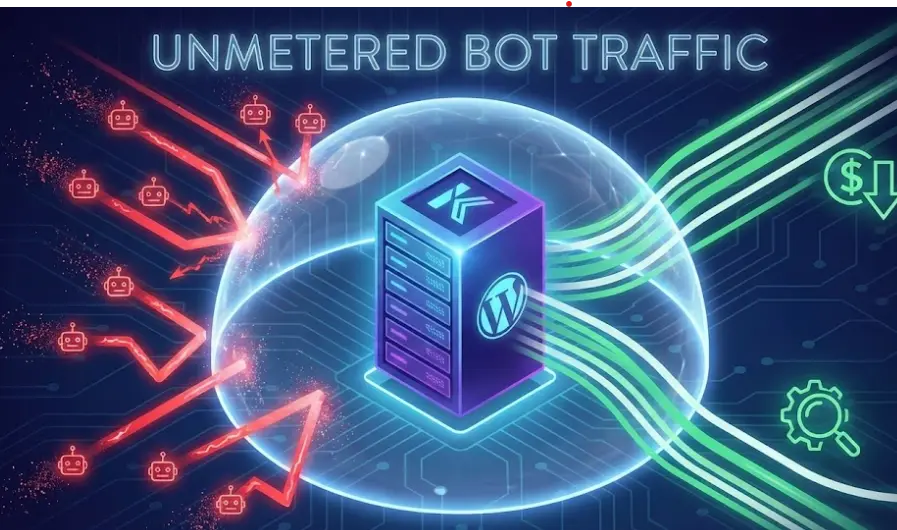
Executive Summary: In a significant move for the managed WordPress hosting landscape, Kinsta has announced a billing model update that eliminates charges for bandwidth consumed by unwanted bots and scrapers. This strategic pivot addresses the exponential rise in AI-driven crawler activity, ensuring clients no longer pay for non-human traffic overhead that does not contribute to business growth. The intersection of infrastructure costs and technical SEO is becoming increasingly critical. As Large Language Models (LLMs) and AI agents aggressively crawl the web to train their datasets, server resource consumption has spiked globally. For high-traffic WordPress sites, this often translates to inflated bandwidth bills caused purely by external scraping tools. Kinsta’s recent policy change highlights a necessary evolution in how hosting providers account for this “phantom” traffic. The Technical Reality of AI Bot Traffic The proliferation of AI bots has fundamentally altered server load dynamics. According to recent Industry Reports, bot traffic is no longer a marginal anomaly but a dominant consumer of resources. This shift forces technical strategists to reconsider how hosting budgets are allocated. Here is the breakdown of the technical impact: AI Scraper Resource Consumption: The surge in AI-powered bots significantly impacts bandwidth consumption, often mimicking legitimate user behavior while aggressively harvesting data. Disproportionate Cost Burden: For many enterprise-level sites, bot traffic can account for up to 50% of total bandwidth costs, a financial drain that offers zero conversion value. Billing Model Evolution: Kinsta’s decision to exclude scraper traffic from billing limits acknowledges that site owners should not be penalized for the global race to scrape data. Impact on WordPress Infrastructure Strategy For Technical SEOs and IT Directors, this development signals a need to audit current hosting environments. While a hosting provider may filter bad traffic, the financial responsibility for that traffic has historically fallen on the client. Removing this cost barrier allows budget reallocation toward performance optimization rather than resource defense. At WP SEO Atlas, our comprehensive technical SEO services focus heavily on optimizing this infrastructure-to-value ratio. We ensure that your hosting environment supports your rankings without bleeding budget due to external factors like aggressive scraping. Action Plan for Technical SEO Managers To capitalize on this industry shift and protect your digital assets, we recommend the following strategic actions: Review Existing Hosting Agreements: Immediately audit the policies of your current provider regarding bandwidth billing. Determine if you are subsidizing AI training data through your monthly invoices. Deep-Dive Log Analysis: Analyze your server access logs to quantify the exact volume of bot traffic vs. human traffic. This data is crucial for negotiating contracts or planning migrations. Fortify Edge Defenses: Consider implementing or strengthening Web Application Firewalls (WAF) or CDN solutions to mitigate unwanted traffic at the edge before it hits your origin server, regardless of your host’s billing policy. Read Also: How Brand Mentions in AI Search Are Changing SEO Conclusion The move to unmetered bot traffic in managed WordPress hosting is a welcome correction in the market. As AI agents continue to saturate the web, the distinction between “traffic” and “value” must be reflected in infrastructure costs. Technical SEOs must remain vigilant, ensuring their hosting partners are adapting to this new reality. Recommended Resource: Search Engine Journal RSS Feed Request Your WP SEO Audit Now →
The LLM Traffic Bubble: Why Organic Search Remains Your Core Revenue Driver
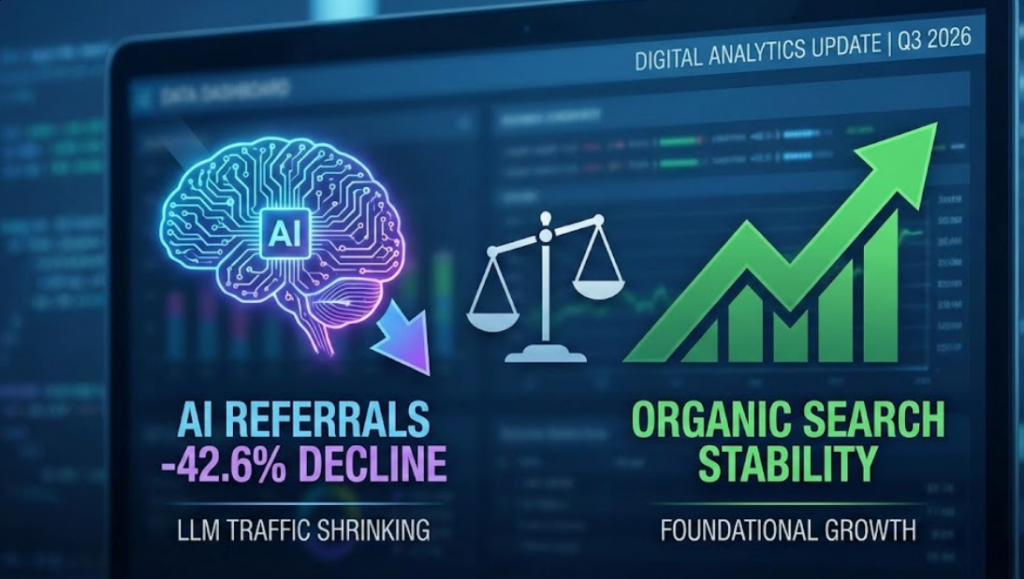
Executive Summary: Recent data analysis reveals a significant market correction regarding Artificial Intelligence in search. Despite early hype, referral traffic from Large Language Models (LLMs) has contracted by 42.6% since July. This shift invalidates previous forecasts that AI chatbots would dominate 50% of organic traffic by 2027, signaling a need for businesses to pivot back to foundational organic search strategies. For the past year, the digital marketing industry has operated under the assumption that AI chatbots and LLMs would rapidly cannibalize traditional search engine traffic. The prevailing theory was that users would stop clicking links and start consuming answers directly from AI agents. However, new data suggests the reality is far more nuanced, and potentially less disruptive to direct traffic than anticipated. As the Lead Technical Strategist at WP SEO Atlas, we are analyzing these metrics to ensure our clients do not over-index on unproven channels while neglecting the primary driver of B2B lead generation: high-intent organic search. Technical Deep Dive: The Data Behind the Drop The initial surge in AI-driven referral traffic has hit a distinct plateau, transitioning into a decline. According to recent Industry Reports, the trajectory of LLM growth has shifted fundamentally in Q3 and Q4. We are observing three critical data points that challenge the “AI Takeover” narrative: The 42.6% Contraction: Since July, referral traffic specifically originating from LLMs has dropped by nearly 43%, despite a general year-over-year growth trend. This indicates that while users are using AI, they are clicking through to source websites less frequently. Failed Market Predictions: The widely circulated forecast by Kevin Indig, which suggested LLMs would account for 50% of all organic traffic by 2027, is now statistically improbable based on current adoption and click-through rates. Decelerating Growth Velocity: The monthly growth rate of LLM traffic has slowed drastically. In 2024, the sector saw a 25.1% monthly increase; by November 2025, that rate plummeted to 10.4%. Impact on Multi-Platform & WordPress Architectures For enterprise WordPress sites and multi-platform ecosystems, this data provides a stabilizing signal. The panic regarding the “death of the click” was premature. However, it also highlights a danger: reliance on AI platforms as a primary traffic source is a volatile strategy. If your current roadmap heavily prioritizes optimization for chatbots over traditional search engines, you may be optimizing for a shrinking channel. At WP SEO Atlas, our specialized SEO services focus on building resilient technical foundations that capture traffic where it actually exists—on search engine results pages (SERPs)—while still maintaining visibility in AI answers as a secondary signal. Strategic Action Plan To navigate this correction in the digital landscape, we recommend the following immediate pivots for your marketing stack: Re-evaluate AI-First Strategies: If you have allocated significant budget to “LLM Optimization” at the expense of technical SEO and content depth, pause and rebalance your portfolio. The rapid growth phase of LLM referrals has cooled. Prioritize Traditional Organic: The data proves that standard organic search remains the most reliable source of traffic. Focus on schema markup, site speed, and high-authority backlinks to secure rankings in Google and Bing. Monitor With Caution: Continue to track AI developments and “Answer Engine” visibility, but treat them as brand awareness channels rather than direct referral performance channels. Read Also: Optimizing for Brand Mentions in AI Search Conclusion The stabilization of LLM traffic growth is a reminder that user behavior changes slower than technology evolves. While AI plays a role in information retrieval, the direct click—and the subsequent conversion—still predominantly belongs to traditional organic search. Your strategy must reflect this reality. Request Your WP SEO Audit Now → Recommended Reading: Search Engine Journal Feed
Brand Mentions: The Critical Factor in AI Search Rankings
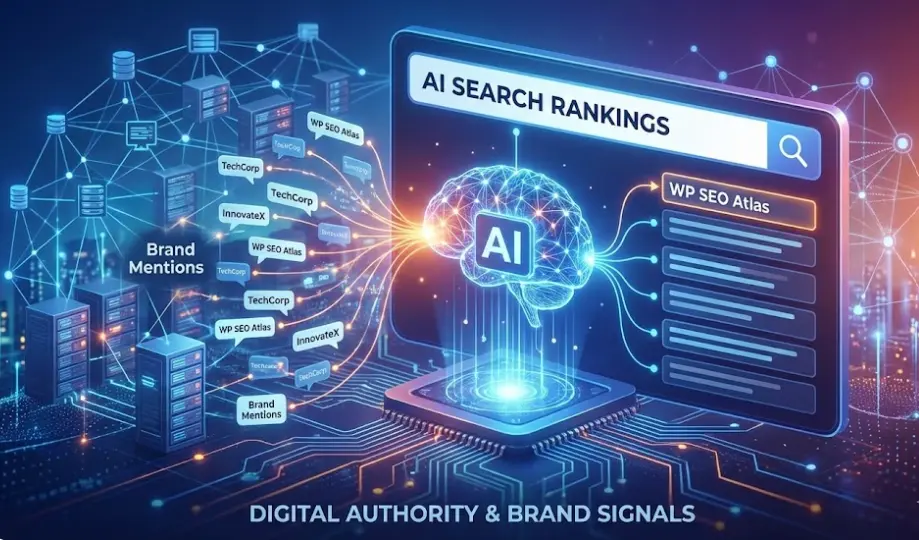
Executive Summary: Recent data from Ahrefs reveals that brand mentions on external websites are closely correlated with improved visibility and ranking in AI-powered search interfaces. This research signals a new era in Off-Page SEO, where acquiring brand mentions is crucial for AI Search performance, moving beyond the traditional concept of backlinks alone. In the rapidly evolving digital landscape, backlinks are no longer the sole currency relied upon by webmasters and SEO experts. With the rise of Large Language Models (LLMs) and AI-driven search engines, the rules have fundamentally changed. At WP SEO Atlas, we are closely monitoring this shift, where “Entity Reputation” and digital footprint have become decisive factors in how algorithms understand and rank your website. The Technical Shift: From Links to Intelligent Signals Analysis and data cited in recent industry reports demonstrate that modern search engines no longer rely solely on the link graph. Instead, they are moving towards analyzing the context in which a brand is mentioned. Why Brand Mentions Fuel AI Engines Feeding Live Training Data: AI-powered search engines utilize live web data and continuous training datasets, making a consistent brand presence across the web essential for long-term visibility. Contextual Authority: Brand mentions on external sites have become a critical factor for visibility, as algorithms associate your brand name with the specific topics you specialize in. Evolution of Off-Page Strategies: Off-Page SEO strategies must evolve to focus on generating high-quality brand signals, not just traditional backlinks, to ensure placement in chatbot answers and generative results. Impact on Your Strategy For site owners and businesses relying on WordPress or multi-platform environments, this shift necessitates merging Digital PR with technical SEO strategies. It is no longer enough for your site to be fast or mobile-friendly; the web must “speak” about you. To achieve this transition and ensure your site remains ahead of the competition, we offer integrated solutions focused on building digital authority. You can explore our specialized SEO solutions, which combine technical optimization with advanced content strategies to amplify your brand signals. Action Plan: Preparing for the Future of Search To leverage these radical changes, we recommend following these steps to strengthen your brand’s position in intelligent search engines: Conduct a Comprehensive Brand Audit: Start by identifying key industry websites, analyzing competitor signals, and evaluating your current brand mentions to pinpoint gaps and opportunities for increased visibility. Develop a Strategic Off-Page SEO Plan: Your plan must focus on earning high-quality brand signals through Digital PR, content collaboration with industry influencers, and active community engagement. Monitor Brand Signals: Continuously track your brand mentions across the web to measure performance and identify new opportunities to improve your appearance in AI-powered search engines periodically. Read Also: The Future of Link Building in the AI Era Conclusion The shift towards AI-based search forces us to rethink how we build digital authority. Brands that succeed in creating positive, contextual “buzz” around their name are the ones that will dominate future search results. For more continuous updates on search developments, we recommend following trusted sources such as the Search Engine Journal Feed. Request Your WP SEO Audit Now →
Google AI Mode: The Shift Toward Agentic SEO and Automated Booking

Executive Summary: Google has initiated the rollout of “Agentic Capabilities” within its AI Mode in Search Labs. This update allows users to execute real-world actions—such as booking restaurant reservations, event tickets, and wellness appointments—directly through the search interface. By aggregating cross-site data in real-time, Google is transitioning from a discovery engine to a transactional agent. The evolution of Search Generative Experience (SGE) into a proactive assistant marks a pivotal moment for B2B and service-oriented digital strategies. At WP SEO Atlas, we view this shift toward Agentic SEO as a fundamental change in how users interact with the web, moving beyond clicks toward direct conversions mediated by AI. To stay ahead, businesses must align their technical infrastructure with these emerging AI behaviors through specialized SEO solutions. Technical Deep Dive: How Agentic AI Functions According to recent Industry Reports, Google’s AI mode is no longer limited to summarizing text. It is now evolving to perform multi-step tasks that previously required human intervention. Direct Agency Actions: The AI now handles complex workflows like appointment scheduling and ticket procurement directly within the SERP ecosystem. Multi-Source Data Aggregation: Google pulls information from various platforms simultaneously to provide users with curated, real-time booking options without requiring them to visit individual websites. Phased Deployment: This feature is currently a limited experiment in Search Labs, primarily accessible to U.S. users, with expanded capabilities reserved for Google AI Pro and Ultra subscribers. The Impact on WordPress Ecosystems For WordPress site owners, this update signals a potential decrease in “informational” organic traffic but a higher value on “transactional” data accuracy. Since the AI acts as the intermediary, your website’s backend must be perfectly optimized to be the primary source for these AI-generated recommendations. This is why understanding our approach to technical excellence is more critical than ever. Integrating robust Agentic SEO strategies ensures that your WordPress site serves as the authoritative data provider for Google’s agents. Failure to optimize for these conversational queries may result in your services being bypassed by the AI agent entirely. Strategic Action Plan for Service Providers To navigate this transition, WP SEO Atlas recommends the following technical adjustments: Monitor Agentic Feature Evolution: Track how Google’s agentic features impact your direct referral traffic, specifically for booking and reservation pages. Refine Structured Data: Analyze your current Schema Markup (LocalBusiness, Reservation, Event) to ensure Google can parse your availability and pricing in real-time. Optimize for AI Mediation: Shift focus toward becoming the “preferred recommendation.” This involves high-authority content that proves reliability, as AI agents prioritize high-trust sources for transaction fulfillment. Read Also: Frequently Asked Questions About AI Search Integration Conclusion The rise of agentic booking is just the beginning of a more interactive, commercial search experience. Businesses must prepare for a future where the AI agent, not the user, is the one “visiting” your site to extract booking data. At WP SEO Atlas, we specialize in preparing your technical stack for this shift. For more details on how we protect your data, please see our Privacy Policy. Request Your WP SEO Audit Now → Recommended Resources: Search Engine Journal News Would you like me to generate a series of Schema Markup templates specifically for your WordPress booking pages to help Google’s AI agents find your data more easily?