
How Digital PR and Brand Mentions Drive Google AI Recommendations
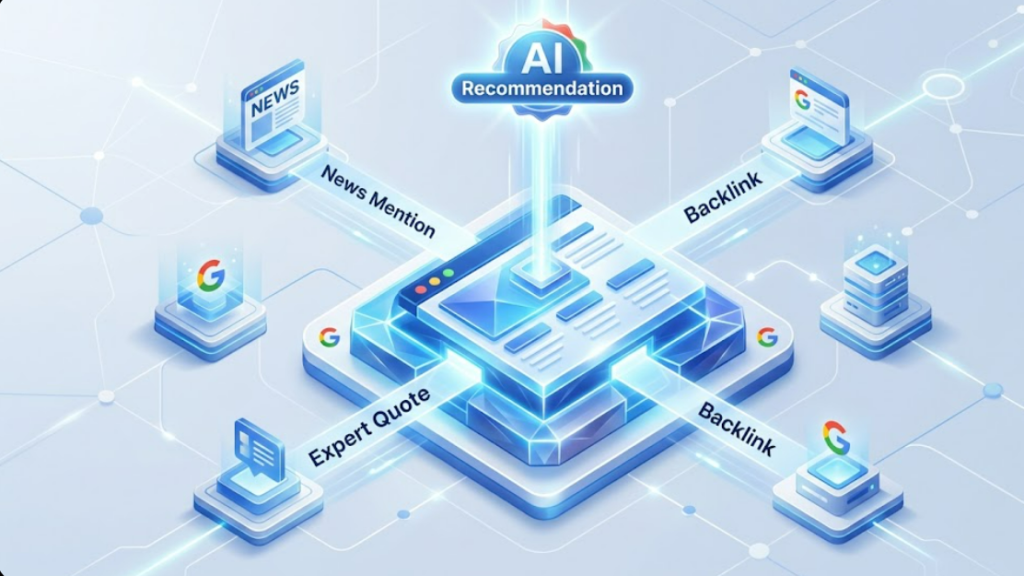
Executive Summary: Google Search leadership has confirmed that Digital PR activities, specifically third-party brand mentions, are critical for securing visibility in AI-driven search recommendations. Because AI search engines aggregate data similarly to human research patterns, maintaining high-quality, user-centric content alongside a strong external brand footprint is essential for modern search dominance. The landscape of enterprise search is rapidly shifting from traditional keyword matching to generative, entity-based AI recommendations. To secure your position in this evolving ecosystem, digital PR can no longer be an afterthought. Bridging the gap between technical infrastructure and off-page authority requires a robust approach. By leveraging our specialized SEO solutions, B2B organizations can proactively build the authoritative brand footprint required to trigger positive AI search recommendations and capture high-intent traffic. Technical Deep Dive: How AI Processes External Signals Recent insights into search generative experiences reveal a fundamental shift in how Google processes off-page signals. According to recent Industry Reports, the emphasis is heavily placed on contextual relevance and widespread brand authority. Digital PR activities directly influence the likelihood of your website being cited by AI search models. Third-party brand mentions act as critical validation points, signaling trust and prominence to AI recommendation algorithms. AI search models behave similarly to human researchers, scanning the broader web for consensus, trusted sources, and authoritative answers. User-centric content creation remains the foundational pillar; AI prioritizes highly relevant, high-quality content that directly addresses user intent. Impact on WordPress Environments For enterprise WordPress environments, technical perfection must align with off-page authority. AI crawlers are highly sensitive to how information is structured and corroborated across the web. While a lightweight, technically sound WordPress architecture ensures your content is indexed efficiently, it is the external mentions and Digital PR campaigns that teach the AI why your site should be recommended over a competitor. If your WordPress site lacks off-page corroboration, even the most optimized content may fail to surface in AI-generated summaries. Strategic Action Plan To capitalize on this shift in Google Search AI, technical and marketing teams must unify their strategies. Implement the following steps to optimize for AI recommendations: Integrating Digital PR strategies seamlessly into your broader SEO frameworks to systematically earn high-value mentions and contextual links. Focusing on high-quality content that naturally attracts organic citations from industry-leading publications and authoritative domains. Educating internal content teams on the critical role of external brand mentions and entity optimization for AI visibility. Read Also: How Brand Mentions Shape AI Search Visibility Conclusion AI recommendations are rewriting the rules of user acquisition. Treating Digital PR and technical SEO as siloed departments will limit your visibility in next-generation search results. By prioritizing entity authority, securing powerful brand mentions, and aligning your content strategy with AI search behavior, you position your brand as the definitive answer in your industry. If you are ready to future-proof your digital presence, we invite you to explore our comprehensive approach by booking a consultation with our technical strategists. Request Your WP SEO Audit Now →
The Shift in Managed Hosting: Kinsta Removes Costs for Bot Traffic
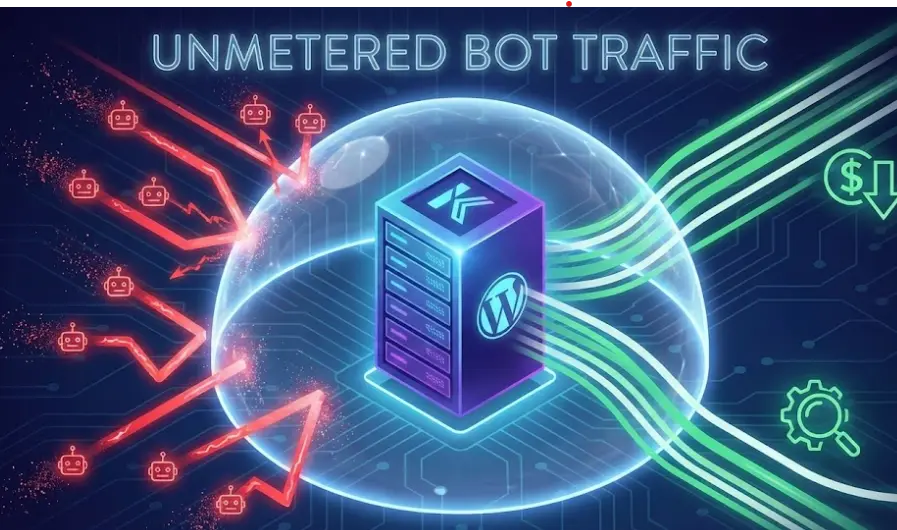
Executive Summary: In a significant move for the managed WordPress hosting landscape, Kinsta has announced a billing model update that eliminates charges for bandwidth consumed by unwanted bots and scrapers. This strategic pivot addresses the exponential rise in AI-driven crawler activity, ensuring clients no longer pay for non-human traffic overhead that does not contribute to business growth. The intersection of infrastructure costs and technical SEO is becoming increasingly critical. As Large Language Models (LLMs) and AI agents aggressively crawl the web to train their datasets, server resource consumption has spiked globally. For high-traffic WordPress sites, this often translates to inflated bandwidth bills caused purely by external scraping tools. Kinsta’s recent policy change highlights a necessary evolution in how hosting providers account for this “phantom” traffic. The Technical Reality of AI Bot Traffic The proliferation of AI bots has fundamentally altered server load dynamics. According to recent Industry Reports, bot traffic is no longer a marginal anomaly but a dominant consumer of resources. This shift forces technical strategists to reconsider how hosting budgets are allocated. Here is the breakdown of the technical impact: AI Scraper Resource Consumption: The surge in AI-powered bots significantly impacts bandwidth consumption, often mimicking legitimate user behavior while aggressively harvesting data. Disproportionate Cost Burden: For many enterprise-level sites, bot traffic can account for up to 50% of total bandwidth costs, a financial drain that offers zero conversion value. Billing Model Evolution: Kinsta’s decision to exclude scraper traffic from billing limits acknowledges that site owners should not be penalized for the global race to scrape data. Impact on WordPress Infrastructure Strategy For Technical SEOs and IT Directors, this development signals a need to audit current hosting environments. While a hosting provider may filter bad traffic, the financial responsibility for that traffic has historically fallen on the client. Removing this cost barrier allows budget reallocation toward performance optimization rather than resource defense. At WP SEO Atlas, our comprehensive technical SEO services focus heavily on optimizing this infrastructure-to-value ratio. We ensure that your hosting environment supports your rankings without bleeding budget due to external factors like aggressive scraping. Action Plan for Technical SEO Managers To capitalize on this industry shift and protect your digital assets, we recommend the following strategic actions: Review Existing Hosting Agreements: Immediately audit the policies of your current provider regarding bandwidth billing. Determine if you are subsidizing AI training data through your monthly invoices. Deep-Dive Log Analysis: Analyze your server access logs to quantify the exact volume of bot traffic vs. human traffic. This data is crucial for negotiating contracts or planning migrations. Fortify Edge Defenses: Consider implementing or strengthening Web Application Firewalls (WAF) or CDN solutions to mitigate unwanted traffic at the edge before it hits your origin server, regardless of your host’s billing policy. Read Also: How Brand Mentions in AI Search Are Changing SEO Conclusion The move to unmetered bot traffic in managed WordPress hosting is a welcome correction in the market. As AI agents continue to saturate the web, the distinction between “traffic” and “value” must be reflected in infrastructure costs. Technical SEOs must remain vigilant, ensuring their hosting partners are adapting to this new reality. Recommended Resource: Search Engine Journal RSS Feed Request Your WP SEO Audit Now →
Brand Mentions: The Critical Factor in AI Search Rankings
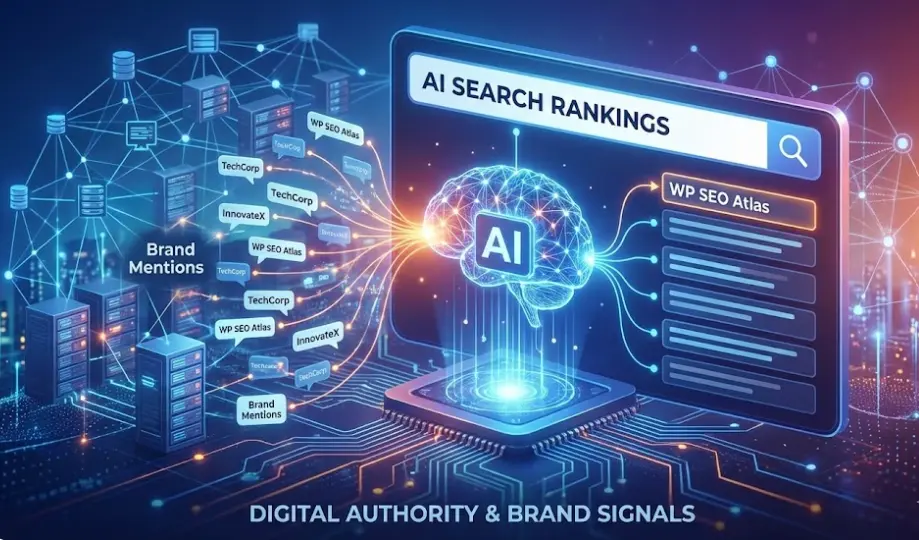
Executive Summary: Recent data from Ahrefs reveals that brand mentions on external websites are closely correlated with improved visibility and ranking in AI-powered search interfaces. This research signals a new era in Off-Page SEO, where acquiring brand mentions is crucial for AI Search performance, moving beyond the traditional concept of backlinks alone. In the rapidly evolving digital landscape, backlinks are no longer the sole currency relied upon by webmasters and SEO experts. With the rise of Large Language Models (LLMs) and AI-driven search engines, the rules have fundamentally changed. At WP SEO Atlas, we are closely monitoring this shift, where “Entity Reputation” and digital footprint have become decisive factors in how algorithms understand and rank your website. The Technical Shift: From Links to Intelligent Signals Analysis and data cited in recent industry reports demonstrate that modern search engines no longer rely solely on the link graph. Instead, they are moving towards analyzing the context in which a brand is mentioned. Why Brand Mentions Fuel AI Engines Feeding Live Training Data: AI-powered search engines utilize live web data and continuous training datasets, making a consistent brand presence across the web essential for long-term visibility. Contextual Authority: Brand mentions on external sites have become a critical factor for visibility, as algorithms associate your brand name with the specific topics you specialize in. Evolution of Off-Page Strategies: Off-Page SEO strategies must evolve to focus on generating high-quality brand signals, not just traditional backlinks, to ensure placement in chatbot answers and generative results. Impact on Your Strategy For site owners and businesses relying on WordPress or multi-platform environments, this shift necessitates merging Digital PR with technical SEO strategies. It is no longer enough for your site to be fast or mobile-friendly; the web must “speak” about you. To achieve this transition and ensure your site remains ahead of the competition, we offer integrated solutions focused on building digital authority. You can explore our specialized SEO solutions, which combine technical optimization with advanced content strategies to amplify your brand signals. Action Plan: Preparing for the Future of Search To leverage these radical changes, we recommend following these steps to strengthen your brand’s position in intelligent search engines: Conduct a Comprehensive Brand Audit: Start by identifying key industry websites, analyzing competitor signals, and evaluating your current brand mentions to pinpoint gaps and opportunities for increased visibility. Develop a Strategic Off-Page SEO Plan: Your plan must focus on earning high-quality brand signals through Digital PR, content collaboration with industry influencers, and active community engagement. Monitor Brand Signals: Continuously track your brand mentions across the web to measure performance and identify new opportunities to improve your appearance in AI-powered search engines periodically. Read Also: The Future of Link Building in the AI Era Conclusion The shift towards AI-based search forces us to rethink how we build digital authority. Brands that succeed in creating positive, contextual “buzz” around their name are the ones that will dominate future search results. For more continuous updates on search developments, we recommend following trusted sources such as the Search Engine Journal Feed. Request Your WP SEO Audit Now →