

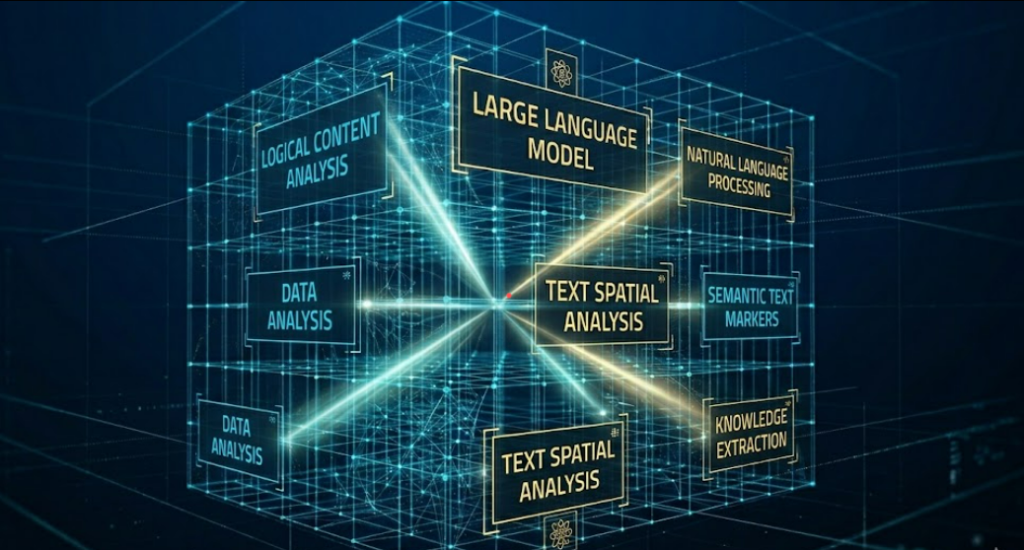

Anthropic’s research on the Claude 3.5 Haiku model reveals that Large Language Models (LLMs) develop an internal spatial awareness of text, similar to humans, especially when managing line breaks within fixed widths. This study provides crucial insights into how LLMs perceive and structure text during generation, highlighting their sophisticated internal mechanisms for handling content boundaries and logical flow.
In the ever-evolving landscape of artificial intelligence, understanding how models “think” is no longer just a technical luxury; it is a strategic necessity. The ability of models to perceive the spatial dimensions of text opens up new horizons for how digital content should be crafted to maximize automated processing capabilities.
Technical Deep Dive: How Do Models Perceive Text Boundaries?
LLMs possess an internal spatial awareness of text, which directly impacts how they structure and format the content they generate. This awareness is not merely about word order; it is an understanding of the environment in which the text appears, as documented in recent Industry Reports.
Internal Processes and Content Flow
- Understanding Spatial Boundaries: Research shows that models recognize where one line ends and another begins, enhancing the visual and logical formatting of the output.
- Managing Complex Information: This research provides deeper insights into the sophisticated internal operations of LLMs, particularly regarding how models balance information density with readability and flow.
- Optimizing for AI Consumption: Understanding LLM text perception helps SEOs and content strategists optimize content formats in alignment with how models process deep information.
The Impact of Spatial Awareness on Multi-Platform Architectures
For enterprises relying on multi-platform architectures and WordPress, these findings mean it is time to rethink content templates. At WP SEO Atlas, we help our clients align their content infrastructure with these new technical requirements through our comprehensive SEO solutions.
Why Should B2B Companies Care?
- Precision in Content Generation: When models perceive space, they can produce highly accurate and well-formatted tables, lists, and code snippets.
- Search Engine Alignment: Search engines relying on LLMs for direct answers will prioritize content that is easy for their models to segment and “understand spatially.”
- Enhanced User Experience: The logical structuring and clean segmentation favored by AI is often the exact same structuring preferred by human readers.
Action Plan: Optimizing Content for the Spatial Awareness Era
To leverage these technical insights, content managers and strategists should implement the following steps:
- Evaluate Current Structuring Practices: Assess how paragraphs and headings are used to ensure clarity and logical segmentation, which aids in AI comprehension and processing.
- Monitor Ongoing AI Research: Continuously track developments from labs like Anthropic to anticipate future implications for content creation, SEO, and how search engines might leverage LLM capabilities.
- Implement Semantic HTML: Use the correct tags to reinforce the spatial and logical signals for the AI agents and models crawling your site.
Read Also: Brand Mentions in AI Search
Conclusion
The way LLMs perceive text goes beyond just understanding words; it involves understanding the “space” those words occupy. This evolution requires a more refined approach to digital content engineering to ensure your brand remains at the forefront of intelligent search results. You can learn more about our foundational approach on our About Us page, or reach out to our technical team directly via our Contact Us portal.
Request Your WP SEO Audit Now →
Recommended Resource: Latest Industry Feeds