
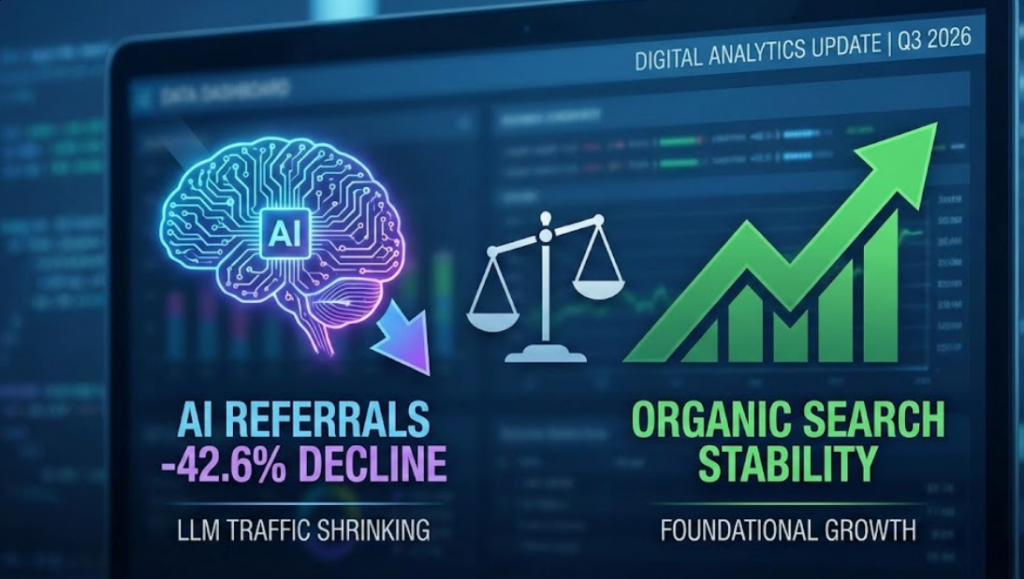

Executive Summary: Recent data analysis reveals a significant market correction regarding Artificial Intelligence in search. Despite early hype, referral traffic from Large Language Models (LLMs) has contracted by 42.6% since July. This shift invalidates previous forecasts that AI chatbots would dominate 50% of organic traffic by 2027, signaling a need for businesses to pivot back to foundational organic search strategies.
For the past year, the digital marketing industry has operated under the assumption that AI chatbots and LLMs would rapidly cannibalize traditional search engine traffic. The prevailing theory was that users would stop clicking links and start consuming answers directly from AI agents. However, new data suggests the reality is far more nuanced, and potentially less disruptive to direct traffic than anticipated.
As the Lead Technical Strategist at WP SEO Atlas, we are analyzing these metrics to ensure our clients do not over-index on unproven channels while neglecting the primary driver of B2B lead generation: high-intent organic search.
Technical Deep Dive: The Data Behind the Drop
The initial surge in AI-driven referral traffic has hit a distinct plateau, transitioning into a decline. According to recent Industry Reports, the trajectory of LLM growth has shifted fundamentally in Q3 and Q4.
We are observing three critical data points that challenge the “AI Takeover” narrative:
- The 42.6% Contraction: Since July, referral traffic specifically originating from LLMs has dropped by nearly 43%, despite a general year-over-year growth trend. This indicates that while users are using AI, they are clicking through to source websites less frequently.
- Failed Market Predictions: The widely circulated forecast by Kevin Indig, which suggested LLMs would account for 50% of all organic traffic by 2027, is now statistically improbable based on current adoption and click-through rates.
- Decelerating Growth Velocity: The monthly growth rate of LLM traffic has slowed drastically. In 2024, the sector saw a 25.1% monthly increase; by November 2025, that rate plummeted to 10.4%.
Impact on Multi-Platform & WordPress Architectures
For enterprise WordPress sites and multi-platform ecosystems, this data provides a stabilizing signal. The panic regarding the “death of the click” was premature. However, it also highlights a danger: reliance on AI platforms as a primary traffic source is a volatile strategy.
If your current roadmap heavily prioritizes optimization for chatbots over traditional search engines, you may be optimizing for a shrinking channel. At WP SEO Atlas, our specialized SEO services focus on building resilient technical foundations that capture traffic where it actually exists—on search engine results pages (SERPs)—while still maintaining visibility in AI answers as a secondary signal.
Strategic Action Plan
To navigate this correction in the digital landscape, we recommend the following immediate pivots for your marketing stack:
- Re-evaluate AI-First Strategies: If you have allocated significant budget to “LLM Optimization” at the expense of technical SEO and content depth, pause and rebalance your portfolio. The rapid growth phase of LLM referrals has cooled.
- Prioritize Traditional Organic: The data proves that standard organic search remains the most reliable source of traffic. Focus on schema markup, site speed, and high-authority backlinks to secure rankings in Google and Bing.
- Monitor With Caution: Continue to track AI developments and “Answer Engine” visibility, but treat them as brand awareness channels rather than direct referral performance channels.
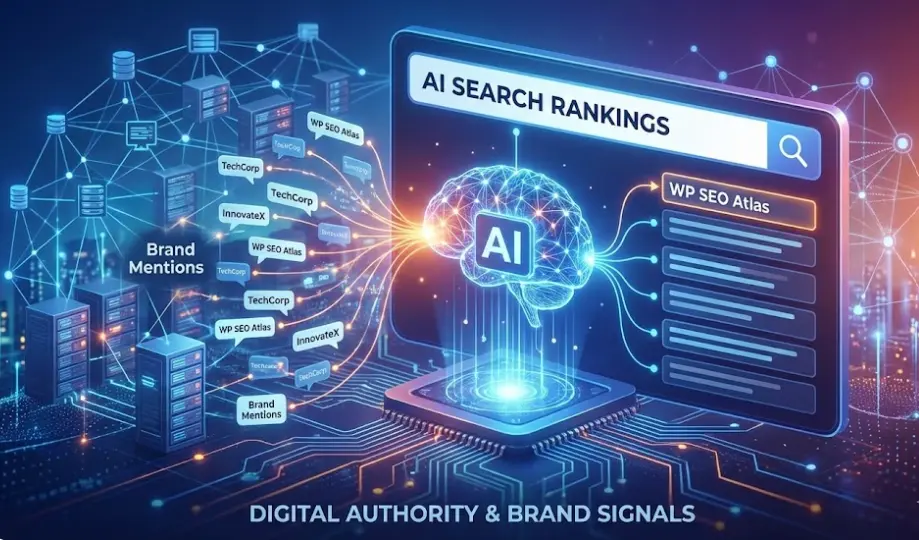
Read Also: Optimizing for Brand Mentions in AI Search
Conclusion
The stabilization of LLM traffic growth is a reminder that user behavior changes slower than technology evolves. While AI plays a role in information retrieval, the direct click—and the subsequent conversion—still predominantly belongs to traditional organic search. Your strategy must reflect this reality.
Request Your WP SEO Audit Now →
Recommended Reading: Search Engine Journal Feed