
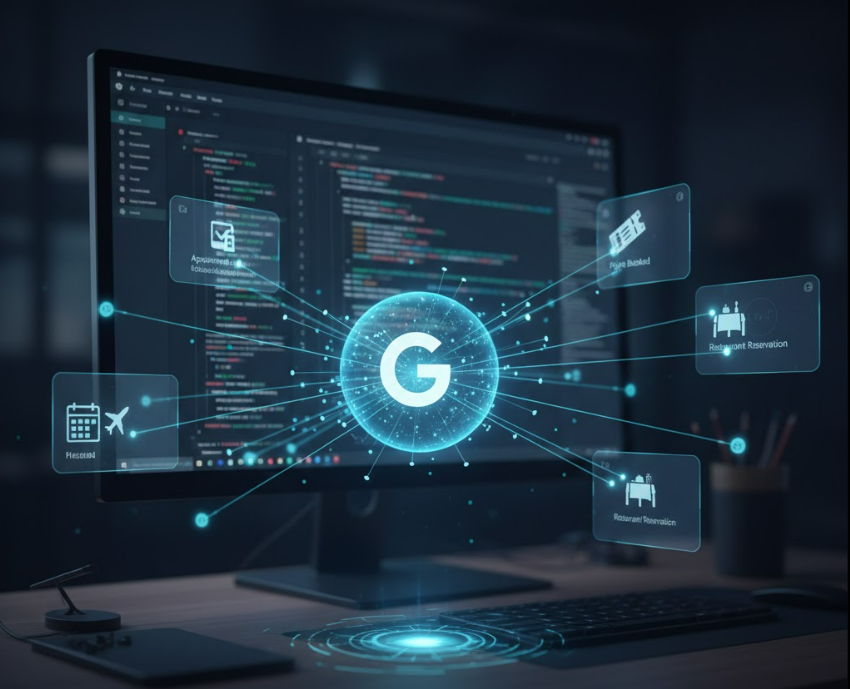

Executive Summary: Google has initiated the rollout of “Agentic Capabilities” within its AI Mode in Search Labs. This update allows users to execute real-world actions—such as booking restaurant reservations, event tickets, and wellness appointments—directly through the search interface. By aggregating cross-site data in real-time, Google is transitioning from a discovery engine to a transactional agent.
The evolution of Search Generative Experience (SGE) into a proactive assistant marks a pivotal moment for B2B and service-oriented digital strategies. At WP SEO Atlas, we view this shift toward Agentic SEO as a fundamental change in how users interact with the web, moving beyond clicks toward direct conversions mediated by AI. To stay ahead, businesses must align their technical infrastructure with these emerging AI behaviors through specialized SEO solutions.
Technical Deep Dive: How Agentic AI Functions
According to recent Industry Reports, Google’s AI mode is no longer limited to summarizing text. It is now evolving to perform multi-step tasks that previously required human intervention.
- Direct Agency Actions: The AI now handles complex workflows like appointment scheduling and ticket procurement directly within the SERP ecosystem.
- Multi-Source Data Aggregation: Google pulls information from various platforms simultaneously to provide users with curated, real-time booking options without requiring them to visit individual websites.
- Phased Deployment: This feature is currently a limited experiment in Search Labs, primarily accessible to U.S. users, with expanded capabilities reserved for Google AI Pro and Ultra subscribers.
The Impact on WordPress Ecosystems
For WordPress site owners, this update signals a potential decrease in “informational” organic traffic but a higher value on “transactional” data accuracy. Since the AI acts as the intermediary, your website’s backend must be perfectly optimized to be the primary source for these AI-generated recommendations. This is why understanding our approach to technical excellence is more critical than ever.
Integrating robust Agentic SEO strategies ensures that your WordPress site serves as the authoritative data provider for Google’s agents. Failure to optimize for these conversational queries may result in your services being bypassed by the AI agent entirely.
Strategic Action Plan for Service Providers
To navigate this transition, WP SEO Atlas recommends the following technical adjustments:
- Monitor Agentic Feature Evolution: Track how Google’s agentic features impact your direct referral traffic, specifically for booking and reservation pages.
- Refine Structured Data: Analyze your current Schema Markup (LocalBusiness, Reservation, Event) to ensure Google can parse your availability and pricing in real-time.
- Optimize for AI Mediation: Shift focus toward becoming the “preferred recommendation.” This involves high-authority content that proves reliability, as AI agents prioritize high-trust sources for transaction fulfillment.
Read Also: Frequently Asked Questions About AI Search Integration
Conclusion
The rise of agentic booking is just the beginning of a more interactive, commercial search experience. Businesses must prepare for a future where the AI agent, not the user, is the one “visiting” your site to extract booking data. At WP SEO Atlas, we specialize in preparing your technical stack for this shift. For more details on how we protect your data, please see our Privacy Policy.
Request Your WP SEO Audit Now →
Recommended Resources: Search Engine Journal News
Would you like me to generate a series of Schema Markup templates specifically for your WordPress booking pages to help Google’s AI agents find your data more easily?